Showing posts with label Stem Cell Research. Show all posts

Wednesday, April 14, 2021

New hydrogel can repair tears in human tissue

EPFL scientists have developed an injectable gel that can attach to various kinds of soft internal tissues and repair tears resulting from an accident or trauma.

Our soft tissues can be torn during a ski accident, a car accident or an accident in the home, for example. And surgeons can have a hard time binding the tissue back together, as stitches often do more harm than good. According to Dominique Pioletti, the head of the Laboratory of Biomechanical Orthopedics at EPFL’s School of Engineering, such surgeries don’t always produce optimal outcomes because the repaired tissue usually doesn’t heal properly. This tends to be the case for tears in cartilage and the cornea, for instance. 

Researchers around the world have been trying for years to develop an adhesive for soft tissue that can withstand the natural stresses and strains within the human body. Pioletti’s group has now come up with a novel family of injectable biomaterials that can bind to various forms of soft tissue. Their bioadhesives, in the form of a gel, can be used in a variety of injury-treatment applications. Their research has just been published in Macromolecular Rapid Communications.

Tuesday, August 27, 2019

Revolutionising the CRISPR method

14.08.2019 | News

Researchers at ETH Zurich have refined the famous CRISPR-Cas method. Now, for the very first time, it is possible to modify dozens, if not hundreds, of genes in a cell simultaneously.
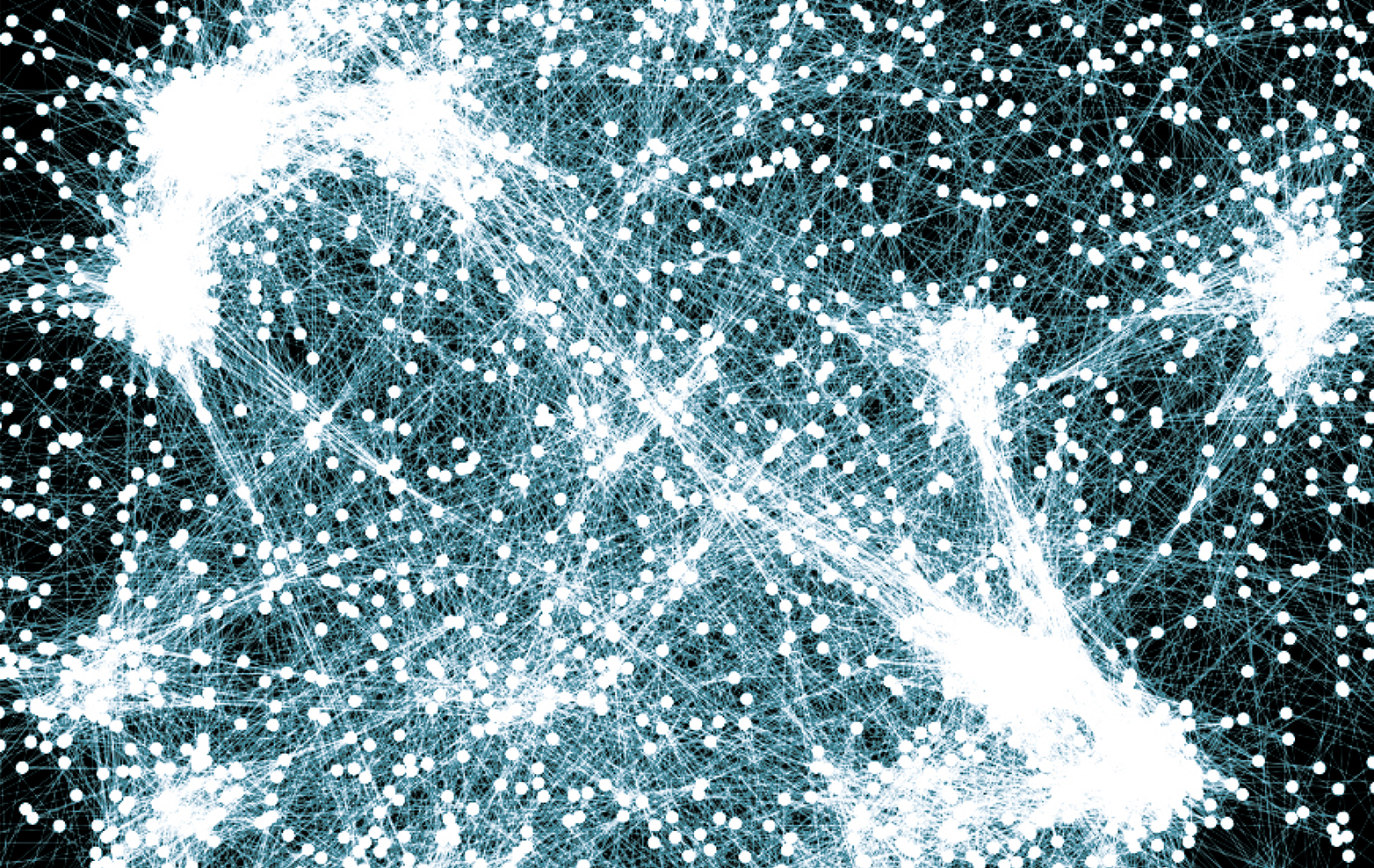
Gennetzwerke
Genes and proteins in cells interact in many different ways. Each dot represents a gene; the lines are their interactions. For the first time, the new method uses biotechnology to influence entire gene networks in one single step. (Visualizations: ETH Zurich / Carlo Cosimo Campa)

Everyone’s talking about CRISPR-Cas. This biotechnological method offers a relatively quick and easy way to manipulate single genes in cells, meaning they can be precisely deleted, replaced or modified. Furthermore, in recent years, researchers have also been using technologies based on CRISPR-Cas to systematically increase or decrease the activity of individual genes. The corresponding methods have become the worldwide standard within a very short time, both in basic biological research and in applied fields such as plant breeding.

Sunday, July 21, 2019

Chinese Scientists Say They’ve Found a Safer Alternative to CRISPR

Researchers from China’s Peking University have developed a new gene-editing technology —  and they think it shows promise as a CRISPR alternative for fighting human diseases.

According to a paper published on Monday in the journal Nature Biotechnology, this new technology, LEAPER, which stands for “leveraging endogenous ADAR for programmable editing of RNA,” works similarly to CRISPR-Cas13, targeting RNA molecules as opposed to DNA like the well-known CRISPR-Cas9.

But while CRISPR-Cas13 relies on both a guide RNA and the Cas13 enzyme to make its edits to RNA, the LEAPER system needs just one component known as an arRNA.

Click for more

Tuesday, April 5, 2016

New frontiers in bioscience

In laboratories around the world, some of the brightest scientists—well-established and those early in their careers—are conceiving novel theories at the very forefront of knowledge. In tissue regeneration, multilevel function, multiscale modeling, longevity, and other cutting-edge fields, breakthrough research will soon enable us to improve human health and perhaps even reveal the deepest mechanisms of life itself.

Paul G. Allen is the cofounder of Microsoft, the chief executive officer of Vulcan Inc., a recipient of the 2015 Carnegie Medal of Philanthropy, and the founder of the Allen Institute for Brain Science, Institute for Cell Science, and Institute for Artificial Intelligence.
 
In his article Allen explains how "...the complexity of biology is a fascinating challenge, and I am keen to see the field deconstruct its mysteries, establish reliable and predictive models, and put that knowledge to work."

Allen further believes ".....we should also be working more aggressively to break down scientific silos by backing more collaborative, interdisciplinary teams that include experts in bioscience, mathematics, computer science, medicine, engineering, and other fields. For example, the Human Genome Project succeeded because of the convergence of massive computing power, new algorithms, expertise in laboratory biology, and broad support from the public and private sectors."

Subscribe to NBIC News