Showing posts with label Biology. Show all posts

Friday, March 24, 2023

How bad is plastic?

Correction to what I say at 9 mins 5 seconds and at 9 minutes 40 seconds: The carboniferous lasted (approximately) from 360 to 300 million years ago and was 60 million years long. (Not from 360 to 60 and 300 million years long.) Sorry about that.

Plastic is everywhere and we have all heard it's bad for the environment. But how bad is it really? In this video I explain that no one really knows how durable plastic is, that microplastics are everywhere, most bioplastics aren't bio-degradable, and that you can make steel from plastic. Yes, steel.

The report about online information on plastic lifetime I mention at 2 mins 58 seconds is here: https://www.pnas.org/content/pnas/117...

The paper about degradation of polystyrene I mention at  4 mins 30 seconds is here: https://pubs.acs.org/doi/10.1021/acs....

The paper about bacteria on microparticles which I mention at 7 mins 30 seconds is here: https://pubmed.ncbi.nlm.nih.gov/31445...

The 2016 paper about bacteria that digest plastic which I mention at 10 mins is here: https://www.science.org/doi/10.1126/s...

The paper about PETase I mention at 11 mins 5 seconds is this: https://www.pnas.org/content/115/19/E...

And the one I mention right after that at 11 mins 20 seconds is this: https://www.sciencedirect.com/science...

The review on non-biodegradable bioplastics that I mention at 13 mins 08 is here: https://www.sciencedirect.com/science...

The one on life-cycles of biodegradable plastics which I mention at 14 mins 9 seconds his this: https://pubs.acs.org/doi/abs/10.1021/...

And finally, the paper in Nature Catalysis about making steel from plastic I mention at 15 mins 49 seconds is here: https://www.nature.com/articles/s4192...

Many thanks to Jordi Busqué for helping with this video http://jordibusque.com/

  • 0:00 Intro
  • 0:31 Sponsor Message
  • 1:22 What is plastic?
  • 2:46 How long does plastic last?
  • 4:49 Why worry about plastic?
  • 8:50 Bacteria that digest plastic
  • 12:34 Are bioplastics any good?
  • 15:36 Steel from plastic

Friday, November 26, 2021

Proton therapy: a success story that started 25 years ago

At the Swiss Paul Scherrer Institute's Center for Proton Therapy, they treat cancer patients and do research for optimized radiotherapy.


Text: Paul Scherrer Institute/Brigitte Osterath

On 25 November 1996, the Center for Proton Therapy at the Paul Scherrer Institute treated a cancer patient using the spot-scanning technique for the very first time – a world premiere. This technique developed at PSI scans and irradiates deep-seated tumors with a pencil-thin beam of charged particles, killing cancer cells with extreme precision while preserving the surrounding healthy tissue. Meanwhile, this technique has become a standard procedure worldwide and since 1996 has been used to treat around 2000 cancer patients at PSI alone – over a third of them children and young people. The fact that the success story started at PSI was more than just a coincidence.

It was Monday, and the team was gathered in the control room at the Center for Proton Therapy. "We were huddled together, peering anxiously at the monitor relaying images from the treatment room," recalls Martin Grossmann, a physicist with the Center for Proton Therapy (CPT) at PSI. Back in the 1990s he was part of a team of 15 researchers led by Hans Blattmann, Eros Pedroni and Gudrun Goitein developing a new technology for treating cancer patients: spot scanning, also known as pencil beam scanning.

The moment of truth came on 25 November 1996: a human patient lay waiting in the treatment room. The 62-year old man from the Canton of Lucerne had malignant skin cancer that had already formed metastases in his brain. The purpose of the intervention was to irradiate these rogue metastases using the new technique.

Despite meticulous preparations, the team was nervous. "You can treat as many plastic dolls or models as much as you want, but when you have a live patient lying there, it’s a totally different experience," says the medical physicist Tony Lomax, one of the development team. That Monday he helped to place the patient in the exact position for the proton beams to precisely target the area of the body to be irradiated. The tolerance was a question of millimeters: "A proton beam is like an extremely sharp tool," Martin Grossmann stresses. "There is no room for error."

A huge success
The team of specialists ensured that the technology functioned smoothly and eventually everyone was able to breathe a sigh of relief: the treatment had gone exactly as planned – just as Martin Grossmann and Tony Lomax had expected. "We were all firmly convinced we had mastered the technology. We made a huge effort to ensure that everything was absolutely safe for the patient," Grossmann notes.

In the following year, CPT moved on to successfully treat several other cancer patients. The medical world was initially skeptical – the technology seemed too unmanageable at the time. During the ten years up to 2008, the Paul Scherrer Institute was the only facility in the world to use this technique. Since then, spot scanning has become established worldwide and now ranks as standard procedure for proton therapy.

Eradicating the tumor
"Proton therapy has completely revolutionized the battle against cancer," says Damien Weber, senior clinician and head of CPT. In proton therapy, a proton beam – a concentrated beam of rapidly moving, charged particles – kills cancer cells by destroying their DNA. Conventional radiation therapy works on the same principle, but uses X-rays rather than protons to destroy the malignant cells.

Protons have a big advantage over more energy-intense radiation, however, Weber goes on to explain. They can be precisely targeted to the specific area of the body, where they unleash their destructive effect. "Undesirable side-effects caused by radiation are therefore much less common, which makes the method especially suitable for children, but also for tumors in particularly sensitive or inaccessible areas of the body." Tumors in the region of the head, neck or spine are typical candidates for treatment.

For a long time the medical profession favored the scattering technique for proton therapy. With this method, the proton beam is spread out and, using an individually tailored metal aperture plate, filtered to match its shape to the size and contour of the tumor. Today this is still the preferred method for treating eye tumors. Not so for deeper-seated tumors.

"We already knew the spot scanning technique would offer a lot of advantages here," says Tony Lomax. The malignant tissue is scanned with the proton beam – "a bit like sketching its outline with a pencil," Lomax explains. Or rather rubbing it out with an eraser. The exact position of the tumor is determined beforehand with the help of imaging techniques such a CT or MRI scan, and the proton beam programmed so that precisely the right amount of charged particles is targeted at the areas to be treated.

PSI’s location advantage
Looking behind the scenes at the Center for Proton Therapy, it soon becomes clear why this technology could only have been developed at PSI rather than in a hospital, for example. The radiation unit (called a gantry) itself is the size of a large truck, and even bigger and more complex equipment is needed to generate the proton beams and deliver them to the gantry.

"Here we are actually working with applied accelerator physics," says Martin Grossmann. “We need measurement devices that control the path of the beam. We need ultrafast electronics to control the magnets used. And above all we need highly qualified people with the skills to build such a machine. These can’t be found in a hospital.”

The concept of spot scanning first arose in Japan. "But our team at CPT was brave enough to say at the time: let’s actually try using that technique," Grossmann. The resulting success story has been a blessing for cancer patients over the past 25 years – and beyond.

Click images to expand!
Gantry 1 at PSI 
World’s first proton therapy facility to employ the spot scanning method
(Photo: Paul Scherrer Institute)

Gantry 3, the newest treatment station at PSI
(Photo: Paul Scherrer Institute)

Gantry 3 (close-up of  the treatment station)
(Photo: Scanderbeg Sauer Photography)

How pencil beam scanning conquered the world
(Graphic: Paul Scherrer Institute/Mahir Dzambegovic)


About PSI
The Paul Scherrer Institute PSI develops, builds and operates large, complex research facilities and makes them available to the national and international research community. The institute's own key research priorities are in the fields of matter and materials, energy and environment and human health. PSI is committed to the training of future generations. Therefore about one quarter of our staff are post-docs, post-graduates or apprentices. Altogether PSI employs 2100 people, thus being the largest research institute in Switzerland. The annual budget amounts to approximately CHF 400 million. PSI is part of the ETH Domain, with the other members being the two Swiss Federal Institutes of Technology, ETH Zurich and EPFL Lausanne, as well as Eawag (Swiss Federal Institute of Aquatic Science and Technology), Empa (Swiss Federal Laboratories for Materials Science and Technology) and WSL (Swiss Federal Institute for Forest, Snow and Landscape Research). 

Wednesday, April 14, 2021

New hydrogel can repair tears in human tissue

EPFL scientists have developed an injectable gel that can attach to various kinds of soft internal tissues and repair tears resulting from an accident or trauma.

Our soft tissues can be torn during a ski accident, a car accident or an accident in the home, for example. And surgeons can have a hard time binding the tissue back together, as stitches often do more harm than good. According to Dominique Pioletti, the head of the Laboratory of Biomechanical Orthopedics at EPFL’s School of Engineering, such surgeries don’t always produce optimal outcomes because the repaired tissue usually doesn’t heal properly. This tends to be the case for tears in cartilage and the cornea, for instance. 

Researchers around the world have been trying for years to develop an adhesive for soft tissue that can withstand the natural stresses and strains within the human body. Pioletti’s group has now come up with a novel family of injectable biomaterials that can bind to various forms of soft tissue. Their bioadhesives, in the form of a gel, can be used in a variety of injury-treatment applications. Their research has just been published in Macromolecular Rapid Communications.

Friday, May 22, 2020

The coronavirus’ rampage through the body


SARS-CoV-2, the virus that causes COVID-19, can severely damage lungs, but in serious cases it doesn’t stop there—clinicians have observed body-wide damage due to the coronavirus. As researchers begin to better understand the pathology of the disease, new treatments can be deployed to help save lives.

Tuesday, August 27, 2019

Revolutionising the CRISPR method

14.08.2019 | News

Researchers at ETH Zurich have refined the famous CRISPR-Cas method. Now, for the very first time, it is possible to modify dozens, if not hundreds, of genes in a cell simultaneously.
Gennetzwerke
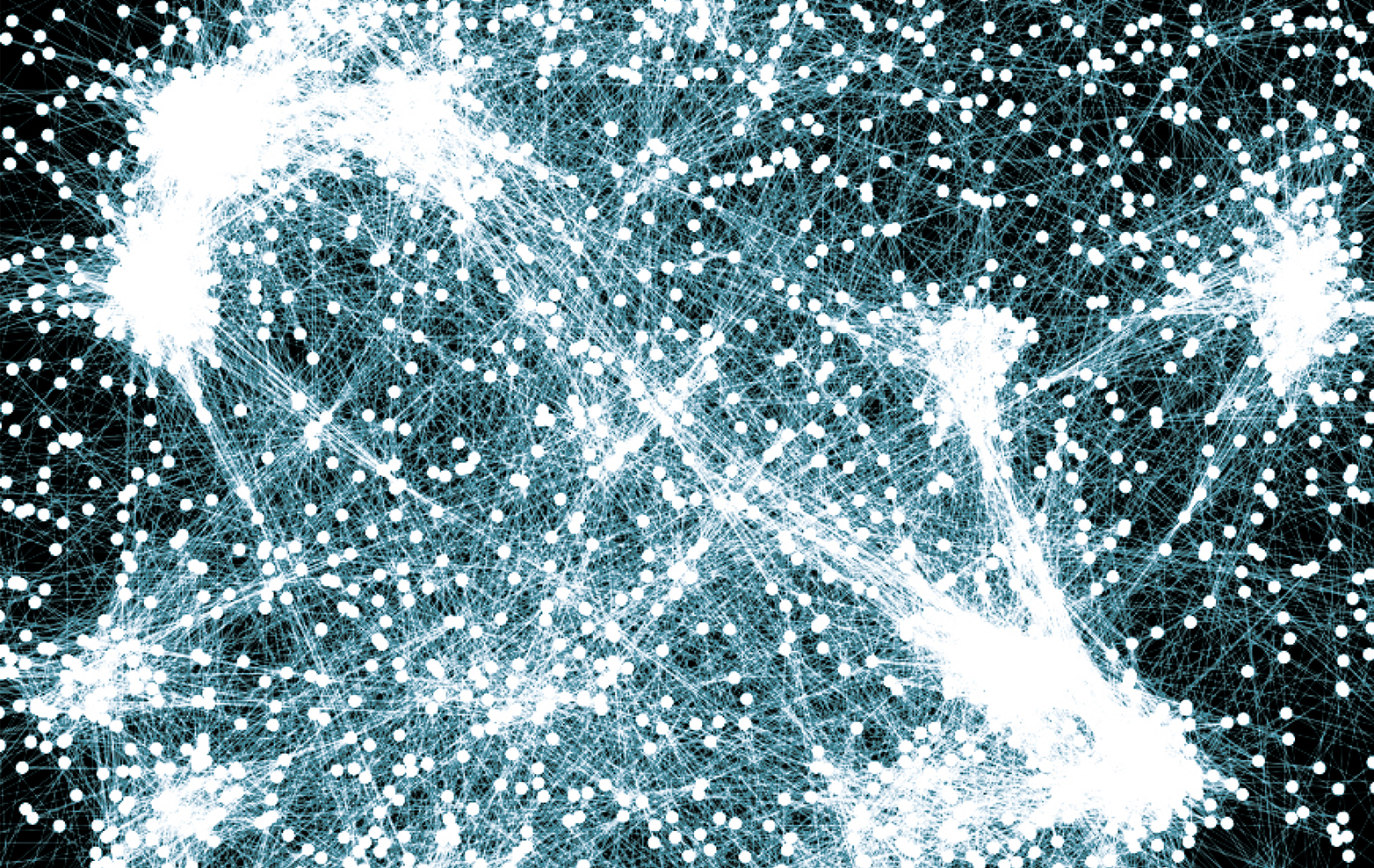
Genes and proteins in cells interact in many different ways. Each dot represents a gene; the lines are their interactions. For the first time, the new method uses biotechnology to influence entire gene networks in one single step. (Visualizations: ETH Zurich / Carlo Cosimo Campa)

Everyone’s talking about CRISPR-Cas. This biotechnological method offers a relatively quick and easy way to manipulate single genes in cells, meaning they can be precisely deleted, replaced or modified. Furthermore, in recent years, researchers have also been using technologies based on CRISPR-Cas to systematically increase or decrease the activity of individual genes. The corresponding methods have become the worldwide standard within a very short time, both in basic biological research and in applied fields such as plant breeding.

Smart interaction between proteins

19.08.2019 | News

Very little was known till now about DNA repair by homologous recombination, which is fundamental for human health. Now an ETH research group has for the first time isolated and studied all the key proteins involved in this process, laying the foundation for investigating many diseases.


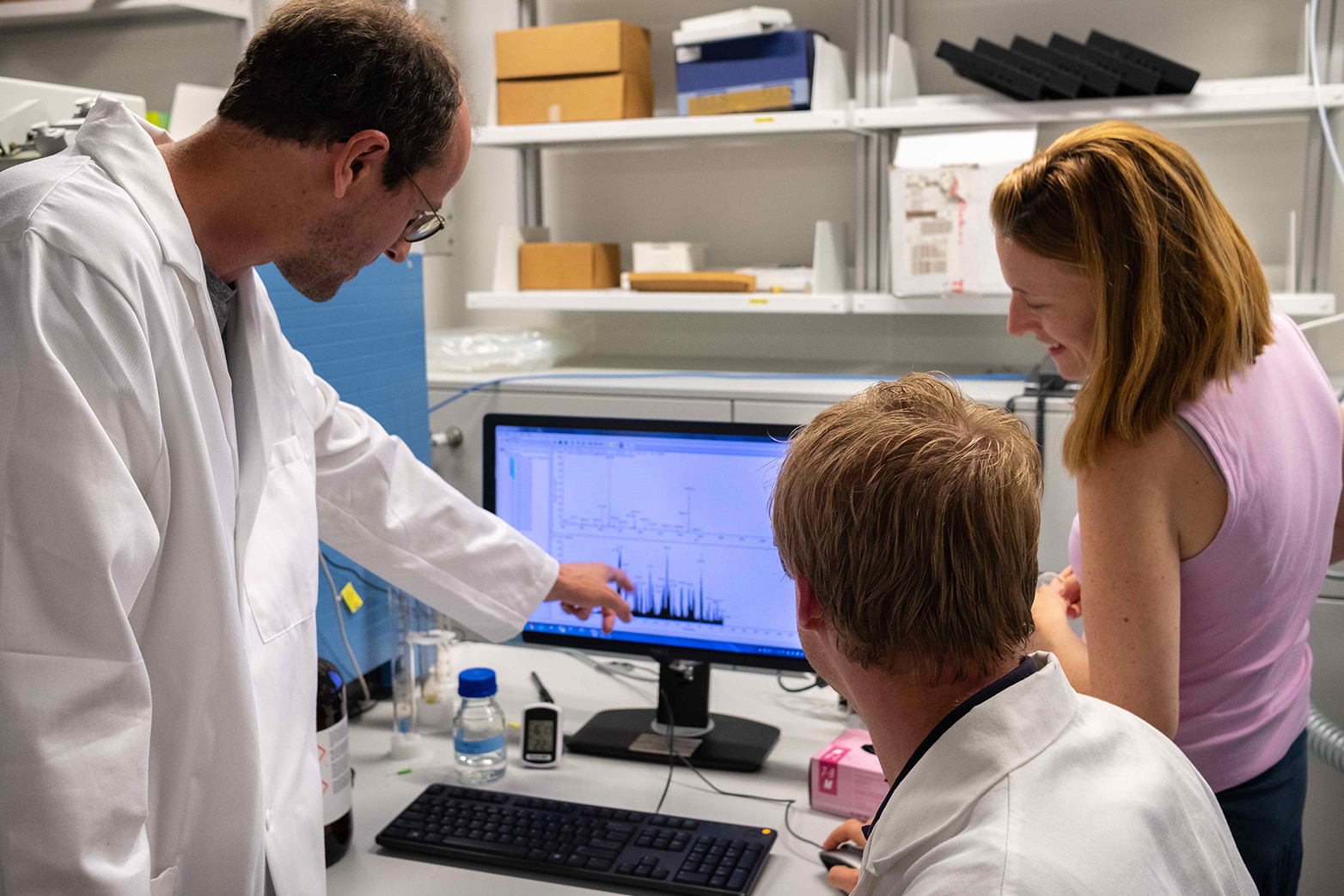
Which proteins are essential for cell division? The biochemist Philipp Wild (left) and his colleagues Ilaria Piazza and Christian Dörig examine the results from the mass spectrometer. (Photograph: ETH Zurich / Adrian Henggeler)


Within our body, the process of cell division is constantly creating new cells to replace old or damaged ones. The genetic information is also duplicated and passed on to the new cells. Complex interaction of many different proteins ensures a smooth process. This is because these proteins immediately repair any errors that creep in during DNA duplication. However, the same protein machinery also performs another function: in germ cells that divide to from gametes – egg cells and sperm – it is responsible for mixing the genetic information of the original maternal and paternal side during cell division. The same mechanism therefore has to resolve two conflicting problems: in normal cell division, called mitosis, it ensures genetic preservation, while in the cell division to produce gametes, or meiosis, it ensures genetic diversity. 

Sunday, July 21, 2019

Chinese Scientists Say They’ve Found a Safer Alternative to CRISPR

Researchers from China’s Peking University have developed a new gene-editing technology —  and they think it shows promise as a CRISPR alternative for fighting human diseases.

According to a paper published on Monday in the journal Nature Biotechnology, this new technology, LEAPER, which stands for “leveraging endogenous ADAR for programmable editing of RNA,” works similarly to CRISPR-Cas13, targeting RNA molecules as opposed to DNA like the well-known CRISPR-Cas9.

But while CRISPR-Cas13 relies on both a guide RNA and the Cas13 enzyme to make its edits to RNA, the LEAPER system needs just one component known as an arRNA.

Click for more

Friday, July 12, 2019

Proton Therapy

There are more than 200 different types of cancers. According to the US National Cancer Institute, nearly 40% of Americans will be diagnosed with cancer during their lives. The World Health Organization names cancer as the second leading cause of death globally, causing nearly one in six deaths. In case anyone needs reminding, cancer is a big deal. Lung cancer is the leading cause of cancer deaths around the world, causing more deaths than prostate, breast and colon cancers combined. Only 18.5% of patients will survive five or more years after being diagnosed with lung cancer. So smokers, take note! Alongside chemotherapy and surgery to remove tumors, about 40% of cancer patients are treated with radiotherapy, which fires ionizing radiation into the body, killing malignant cells with X-ray photons. Roughly 17,000 clinics worldwide deliver X-ray radiotherapy treatment today.

The rise in popularity of proton therapy (vs X-ray) is continuing across the globe. It is estimated that more than 165,000 patients suffering from a variety of cancers, such as prostate cancer, brain tumors, etc. have already been successfully treated using this method. In fact, the proton therapy market is on track to become a multibillion-dollar industry by 2024. The number of proton therapy centers is increasing globally. Still, industry experts believe that players will miss out on a majority of cancer patients who can benefit with proton therapy, overlooking a huge multi-Billion-dollar potential market.

The proton therapy market is likely to almost double by 2024 from its current market value.  Globally, the numbers of patients treated with proton therapy is very low whereas the potential candidates for it are in the Millions.

Tuesday, January 31, 2017

Swiss Society for Biomaterials & Regenerative Medicine Annual Conference

Advances in Antimicrobial Biomaterials science, industry, physicians

The SSB+RM meetings are devoted to all aspects of biomaterials science including basic research, engineering, and medical applications. The 2017 conference is dedicated to Advances in Antimicrobial Materials. This conference will include keynote speakers who will give an overview of clinical and commercial translations of biomaterials. Selected sessions are devoted to the design, preparation, characterization, quality control and application of all types of antimicrobial materials from the viewpoints of academia, industry and the clinics.
 
Both oral and poster presentations are welcome. Those wishing to present are asked to submit an extended abstract (1 page maximum) by March 17th, 2017. Abstracts must be submitted as an electronic file in MS Word and must adhere to the abstract guidelines. The abstract template can soon be obtained from the conference website.
 
 
Contact
Dr Katharina Maniura
EMPA, Biointerfaces
Phone: +41 58 765 74 47
e-mail

Thursday, November 3, 2016

Alzheimer's, a dementia disease of the past?

The BACE1 inhibitor verubecestat (MK-8931) reduces CNS β-amyloid in animal models and in Alzheimer’s disease patients

The discovery of BACE1 inhibitors that reduce β-amyloid peptides in Alzheimer’s disease (AD) patients has been an encouraging development in the quest for a disease-modifying therapy. Kennedy and colleagues now report the discovery of verubecestat, a structurally unique, orally bioavailable small molecule that potently inhibits brain BACE1 activity resulting in a reduction in Aβ peptides in the cerebrospinal fluid of animals, healthy volunteers, and AD patients. No dose-limiting toxicities were observed in chronic animal toxicology studies or in phase 1 human studies, thus reducing safety concerns raised by previous reports of BACE inhibitors and BACE1 knockout mice.
 
According to the World Health Organization over 36 million people world-wide are affected by dementia, of which the majority have Alzheimer’s. This number is forecast to double by 2030 and triple by 2050 if no treatment is discovered. So great hopes are placed on verubecestat. 
 

Monday, August 15, 2016

Nanoparticles to Break Up Plaque and Prevent Cavities

Philadelphia, PA (Scicasts) — The bacteria that live in dental plaque and contribute to tooth decay often resist traditional antimicrobial treatment, as they can "hide" within a sticky biofilm matrix, a glue-like polymer scaffold.
 
A new strategy conceived by University of Pennsylvania researchers took a more sophisticated approach. Instead of simply applying an antibiotic to the teeth, they took advantage of the pH-sensitive and enzyme-like properties of iron-containing nanoparticles to catalyze the activity of hydrogen peroxide, a commonly used natural antiseptic. The activated hydrogen peroxide produced free radicals that were able to simultaneously degrade the biofilm matrix and kill the bacteria within, significantly reducing plaque and preventing the tooth decay, or cavities, in an animal model.
 
"Even using a very low concentration of hydrogen peroxide, the process was incredibly effective at disrupting the biofilm," said Hyun (Michel) Koo, a professor in the Penn School of Dental Medicine's Department of Orthodontics and divisions of Pediatric Dentistry and Community and Oral Health and the senior author of the study, which was published in the journal Biomaterials. "Adding nanoparticles increased the efficiency of bacterial killing more than 5,000-fold."
 

Research Shows Gentle Cancer Treatment Using Nanoparticles Works

Copenhagen, Denmark (Scicasts) — Cancer treatments based on laser irradiation of tiny nanoparticles that are injected directly into the cancer tumour are working and can destroy the cancer from within.
 
Researchers from the Niels Bohr Institute and the Faculty of Health Sciences at the University of Copenhagen have developed a method that kills cancer cells using nanoparticles and lasers. The treatment has been tested on mice and it has been demonstrated that the cancer tumours are considerably damaged. The results are published in the scientific journal, Scientific Reports.
 
Traditional cancer treatments like radiation and chemotherapy have major side affects, because they not only affect the cancer tumours, but also the healthy parts of the body. A large interdisciplinary research project between physicists at the Niels Bohr Institute and doctors and human biologists at the Panum Institute and Rigshospitalet has developed a new treatment that only affects cancer tumours locally, therefore, much more gentle on the body. The project is called Laser Activated Nanoparticles for Tumor Elimination (LANTERN). The head of the project is Professor Lene Oddershede, a biophysicist and head of the research group Optical Tweezers at the Niels Bohr Institute at the University of Copenhagen in collaboration with Professor Andreas Kjær, head of the Cluster for Molecular Imaging, Panum Institute.

Click for complete article

Monday, May 9, 2016

Latest Advances in Nano-Oncology

Unique characteristics of nanoparticles make them highly attractive for various applications in oncology. They are able to function as carriers for chemotherapeutic drugs to increase their therapeutic index and lower their toxicity, as therapeutic agents in photodynamic, gene, and thermal therapy, as well as molecular imaging agents to detect and monitor cancer progression. Several nanoparticle-based agents for cancer therapy and diagnostics have been approved by FDA, more are in clinical trials, and even more are in the discovery and early development stages in academic and industry laboratories. Cambridge Healthtech Institute’s Latest Advances in Nano-Oncology symposium is designed to encourage open discussion and knowledge exchange in this exiting and rapidly developing area at the junction of nanobiotechnology and oncology.
 

Thursday, April 21, 2016

Hitting cancer from the inside

Most cancer cells carry unique receptors on their surface. Because the receptors extend into the cell's interior, they act as intermediaries between the outside and the inside. Chemotherapeutic drugs that dock on the exterior trigger a cascade of biochemical reactions inside the cell. At the end of this process, the cancer cells should die off. Researchers at the Paul Scherrer Institute PSI are now investigating a new method that would not only attach radioactive substances to the outside of a cancer cell, but also would channel them right into the cell's nucleus. Thus the radiation source would remain inside the cell and work in a more targeted way, by getting closer to the genetic information. If the suitable radioactive compounds can be found, this method has the potential to help with several kinds of cancer in the future.

One of the most important goals in cancer therapy is to strike at the heart of the camouflaged cancer cells – that is, in the nucleus. In cancer cells, pathologically mutated DNA ensures that cell division occurs more rapidly and more frequently than in normal cells. Many cytotoxins used in chemotherapy against cancer manage to penetrate to the cell nucleus and attack precisely those processes that are important for cell division. Others interfere with the metabolism of tumour cells, thereby impeding their growth. Thus they all operate within the cell, and particularly at the time when it is dividing. Many cytotoxins, however, are non-specific and also attack other tissues of the body that renew themselves frequently, such as hair or mucous membranes.
 
 
Subscribe to NBIC News